_edited.jpg)
Home Lighting Design: Ambience, Mood & Practicality Explained

Lighting is one of the most powerful design tools in any home. It shapes the mood, sets the ambience, highlights your interiors, and even affects how spacious your rooms feel. Yet, it’s often the most underrated part of home design. In this guide, we break down the essentials of home lighting, helping you understand how to balance ambience, mood, and practicality for a beautifully lit home.
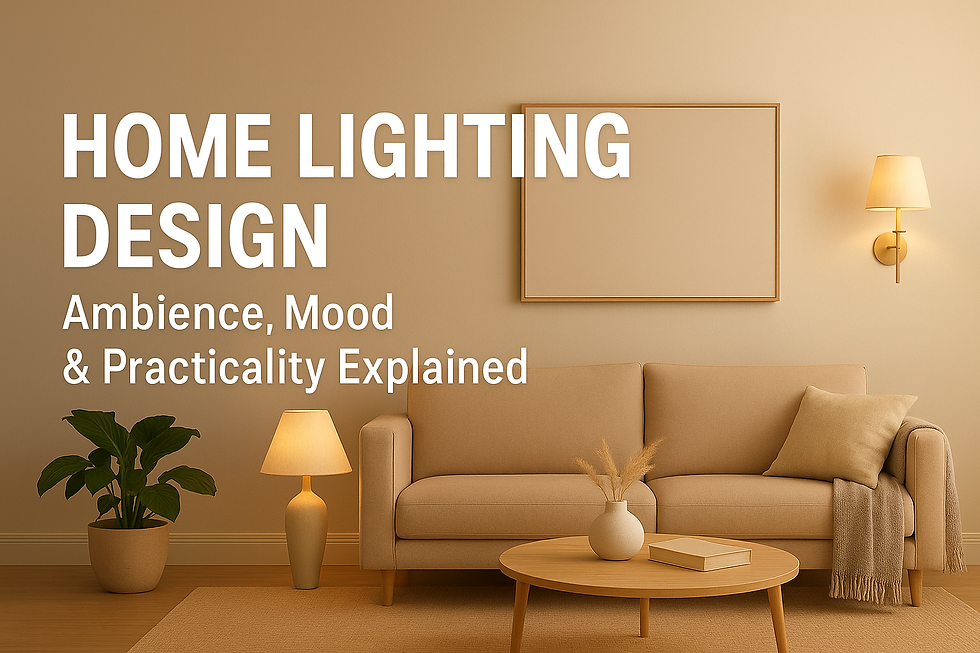
1. Why Lighting Matters More Than You Think
Lighting does far more than brighten a room, it defines how your home feels and functions. The right lighting can make a small room look bigger, make textures stand out, improve your daily tasks, and create a warm, inviting environment. Good lighting design is both art and science, and mastering it transforms any space.
2. The Three Core Types of Lighting
Every well-designed home uses a combination of these three lighting layers:
Ambient Lighting (General Illumination)
This is your main source of light, ceiling lights, chandeliers, or recessed lighting. It sets the base brightness level of the room.
Task Lighting (Focused Light for Activities)
Lights that help you perform activities like reading, cooking, grooming or working. Examples: desk lamps, pendant lights over kitchen counters, mirror lights in bathrooms.
Accent Lighting (Highlighting Features)
Accent lights draw attention to décor elements: art pieces, plants, textured walls, or architectural features. Think spotlights or wall washers.
A perfect home lighting plan balances all three.
3. Lighting for Ambience: Setting the Tone of a Room
Ambience is all about how a room feels. Warm lighting creates a cozy, relaxing vibe, while cool lighting feels energising and fresh.
Warm White (2700K–3000K): Ideal for living rooms, bedrooms, dining rooms.
Neutral White (3500K–4000K): Ideal for kitchens, study tables, common areas.
Cool White (5000K+): Best for task-driven spaces like utility rooms.
Your ambience depends heavily on colour temperature, and choosing the wrong one can ruin your décor.
4. Lighting for Mood: Creating Emotional Impact
Lighting has psychology behind it. The right light affects your mindset and emotions.
Soft diffused lights = calm & comfort
Bright direct lights = productivity
Coloured LED mood lighting = drama & personality
Dimmers = instant atmosphere control
Whether it’s a romantic dinner setup or a calming evening in your bedroom, mood lighting sets the emotional tone.
5. Lighting for Practicality: Function Comes First
A beautiful room becomes unusable if lighting is not functional. Practical lighting is about ensuring every activity is supported.
Add practical lighting in:
Kitchen counters
Dressing mirrors
Study/work desks
Reading corners
Staircases
Wardrobes
Lighting should never just look good, it should make life easier.
6. Room-by-Room Lighting Guide
Living Room
Use layered lighting, ambient + accent + lamps. Highlight your TV wall, artwork, or textured panels.
Kitchen
Pendant lights above the island, under-cabinet LED strips, and bright overhead lighting ensure safety and comfort.
Bedroom
Warm, soft lighting with bedside lamps, cove lighting, and low-level strip lighting to avoid harsh brightness at night.
Bathroom
Bright white lights around the mirror + soft ambient light for a spa-like effect.
Balcony / Outdoor
Warm string lights, lanterns, or outdoor-rated sconces for ambience.
7. Common Lighting Mistakes to Avoid
Using only ceiling lights
Choosing wrong colour temperatures
Ignoring shadows
Poor placement of task lights
Overusing bright white lights in cozy spaces
Not adding dimmers
A balanced lighting plan solves all these issues.
Q & A: Quick Clarity on Home Lighting
Q: Which colour temperature is best for Indian homes?
A: Warm white (3000K) works best for living and bedrooms; neutral white for kitchens and workspaces.
Q: Is LED better than traditional bulbs?
A: Yes, LEDs save energy, last longer, and offer better colour control.
Q: Should I install dimmers?
A: Absolutely! Dimmers let you control ambience instantly and save power.
Q: What is the ideal lighting for small rooms?
A: Recessed lights + mirrors + warm ambient lighting to increase perceived space.
Why Lighting with Studio A Makes All the Difference
At Studio A Interiors, lighting is not an afterthought, it’s a core part of the design process. We design lighting that is:
Functional
Aesthetic
Mood-driven
Energy-efficient
Perfectly matched to your interior theme
From layout design to fixture selection, we ensure your home feels luxurious, warm, and thoughtfully illuminated.
👉 Know about our Interior Design Services:
Contact Studio A
📞 +91 63003 54834 📧 info@studioainteriordesign.in


Comments